Why Bedside Cot Co Sleeper Is Relevant 2024
Bedside Co-Sleeper – What is a Bedside Co-Sleeper? A bedside co-sleeper cot is a bassinet which attaches to the side of your bed, allowing you to reach for baby in the middle of the night. This type of cosleeping has been recommended by the NHS as well as the Lullaby Trust as it allows you keep your baby close without risking SIDS. Peace of Mind Co-sleeping is a great option for parents. Although some parents are worried that sleeping in close proximity to their child could increase the risk of SIDS, research like those conducted by NHS suggest that the opposite is true. Co-sleeping refers to sharing a sleeping space which could increase the risk of SIDS. Bedside cot co sleepers have been designed to provide a safe middle ground between bed-sharing and separate sleeping areas which allows parents to reach over their child and gently to comfort or nurse them, without leaving the comfort of their own bed. Babies sleep best when they are fed and comforted regularly, but exhausted parents can find it difficult to leave their beds to feed or soothe them. just click the following website cot co-sleeper lets parents keep their infant at arm's length and avoid having to leave their bed. Some co sleepers come with an innovative design, such as the SnuzPod. Recommended Reading can be closed to turn the cot in a cradle. This provides an additional layer of protection. This allows parents who are exhausted to be able to watch their babies while lying in bed. Even a small amount of alcohol or drugs could increase the risk of SIDS. Co-sleeping with children is not recommended when the parent has a history of sleeping through the night. The NHS suggests that young babies are always placed to sleep on their backs in order to minimize the risk of accidental rolling and suffocation. The most secure option is to utilize a cot at the bedside, bassinet or cradle. Safety While co-sleeping is widely practiced in many countries however, the NHS suggests that infants sleep in their own cot rather than sharing your bed. This is due to the higher risk of suffocation and overheating. Babies who sleep with parents are more likely to be surrounded by blankets, pillows, or sheets, which may hinder their breathing and lead to SIDS. A bedside crib can be a great solution. The crib is close to the parents, which prevents suffocation or overheating of the baby. It can be reached easily for nighttime feedings and soothing. 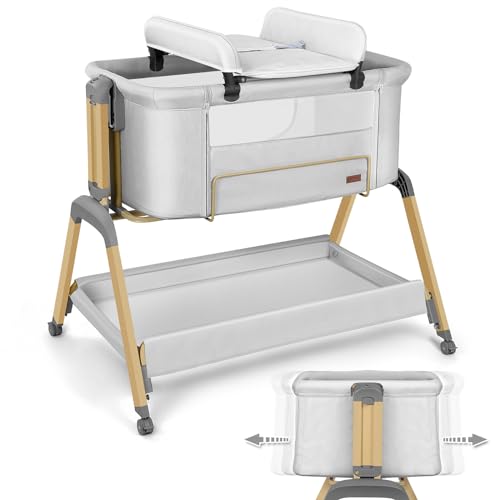 When the Dutch co-sleeping pod first went viral in 2014, parents around the world were eager to get their hands on one to experience safe co-sleeping with their baby. Despite the excitement doctors don't believe in a bed that connects to the side of a adult bed. The most significant concern is the fact that a parent could fall on the infant and cause strangulation or suffocation. The risk is especially high if the parent is drinking, smoking, alcohol or taking drugs while asleep. Falls, overheating and maternal death are other risks. If you decide to opt for a bedside sleeper, it is vital to choose one that is in line with the highest safety standards. The mattress must be fitted without gaps and should not be prone sagging. It is also important to be familiar with the recommended weight and age for the person sleeping. All new bedside sleepers must conform to the new safety standard that was introduced in November 2020. It replaces the old standards. Some stores might still have older models available however they are slowly disappearing as manufacturers switch to the new standards. If you opt for an older model be sure it is in good working order before purchasing it. Check that the mechanism used to secure the bed to the mattress of the parent and does not leave any gaps. Also, make sure that the mattress fits in the sleeper in a proper way, without bulges or gaps. The sheets must also be snug enough that the baby doesn't slide into a pocket and become stuck or suffocate. Convenience Many new parents experience an instinctual desire to be by their baby's side at night, however experts in sleep such as Lullaby Trust recommend avoiding bed-sharing. A bedside crib or bassinet is a safer alternative. These cribs are designed to connect directly to the parent's bed to allow the baby to be easily reached for feeding or sleeping. This means exhausted parents don't have to leave their bed at night and can keep an eye on their baby whilst still sleeping well. Babies who sleep in a separate bedroom are more likely than other children to have breathing pauses (apnoea) and are also at higher risk of developing SIDS. According to research that babies sleep better when they are close to their parents. You can also quickly respond to any issues or concerns, or even reassure your baby to make them feel more comfortable. The best bedside crib or bassinet for your family will depend on a variety of factors, including your living environment and long-term plans. If you share a house with a partner, or if your child will be using the crib as they grow in age, it might be beneficial to pick a convertible crib that can transform into a solitary crib or toddlers beds. A lot of our cribs have this option, and we suggest getting in touch with us for more information. The bedside crib fosters bonding between the mother and baby. It's a convenient and safe choice for new parents who are exhausted. Research has shown that mothers who breastfeed tend to nurse for longer if their baby's close. This results in greater bonding between the two. This is why a bedside cot is so popular and is a good option for any new mom who wants to keep their baby close. However, when it comes to buying a bassinet or co-sleeper, you must check that it complies with all of the safe sleep and Lullaby Trust guidelines. Also, you should consider your budget, as there are many options available.